Steel and Light in Motion: Bringing Biomimetic Flight to the Studio
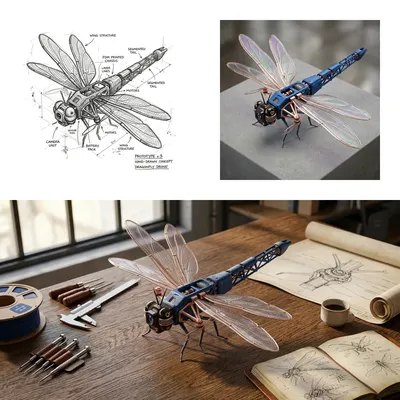
How watching a dragonfly over still water sparked a quiet, high-precision aerial capture tool built for modern design studios.
From Pondside Observation to Studio Flight
Three hours spent watching a green darner dragonfly hover over still water reshaped our design roadmap. It shifted ninety degrees laterally without pivoting its body, stopped dead in midair, then climbed vertically out of sight. That afternoon raised a simple question: why do creative studio tools still sound like industrial fans and move like bricks?
Plastic quadcopters have no place in a professional workspace. Designers needed an aerial capture tool that felt organic—quiet, precise, and nimble enough to fly while you work at your desk. We scrapped traditional propeller assemblies and rebuilt micro-aerial kinematics from scratch, replicating natural wing movement.
Built with Precision: From Rough Shells to Desk Art
Synchronizing four carbon-composite wings at high frequencies without inducing structural fatigue posed a tough engineering challenge. During rapid prototyping, we turned to 3D printing to iterate chassis geometries in real time.
The engineering workflow split into two distinct stages:
- Structural testing: We printed load-bearing frames through FDM printing using rigid PETG and carbon-filled filaments to stress-test motor mounts and weight distribution.
- Micro-detail components: For delicate wing hinges and tight outer shells, we shifted to high-resolution resin print runs that held sub-millimeter tolerances.
The finished assembly integrates an anodized aluminum spine with ultralight printed components. Seated on its weighted base, it reads as a kinetic sculpture. Lift it off the dock, and it becomes a precision indoor camera platform.
How Visionary Creators Use It Every Day
Working at a drafting table on a scale architectural model, you need a clean eye-level shot through a tiny doorway. Instead of setting up bulky camera booms, you lift this lightweight unit from its dock. It glides through tight frame cuts, streaming clear video directly to your primary display.
The device integrates cleanly into existing workflows, serving as a practical asset for studios involved in custom product design. Industrial design teams and film directors can capture tight indoor angles without high-pitched rotor noise breaking concentration.
FAQ
What are the physical dimensions and flight weight of the dragonfly drone?
The drone sports a 28cm wingspan and weighs roughly 140 grams with the battery installed. Its compact footprint requires minimal desk real estate.
How did 3D printing fit into the actual design process?
Initial structural testing relied on FDM printing to verify frame strength and battery placement. Production of micro-gears and wing linkages then moved to high-precision resin printing for smooth articulation.
Can the drone be tailored for studio branding or custom product design projects?
Yes. Custom shell coatings, specific colorways, and laser-engraved aluminum bases are available to match studio aesthetics.
How noisy is the flight mechanism in a quiet indoor workspace?
Standard quadcopters push high-frequency motor noise into the room. This flapping-wing mechanism operates near 42 decibels—a low hum that sits comfortably below conversation levels.
You may also like
Contact us: support@memorieslab.co
← Back to gallery